

Narrative
- Prospects don’t come back.
- Deals take longer, close smaller, or never start.
Commercialization Muscle Model™
Strong technology cannot compensate for a commercial playbook that fails to understand the market, tell a precise story, reach the buyer effectively, or align the organization.
Where you feel the pressure tells us where to start. It doesn’t tell us what’s causing it.
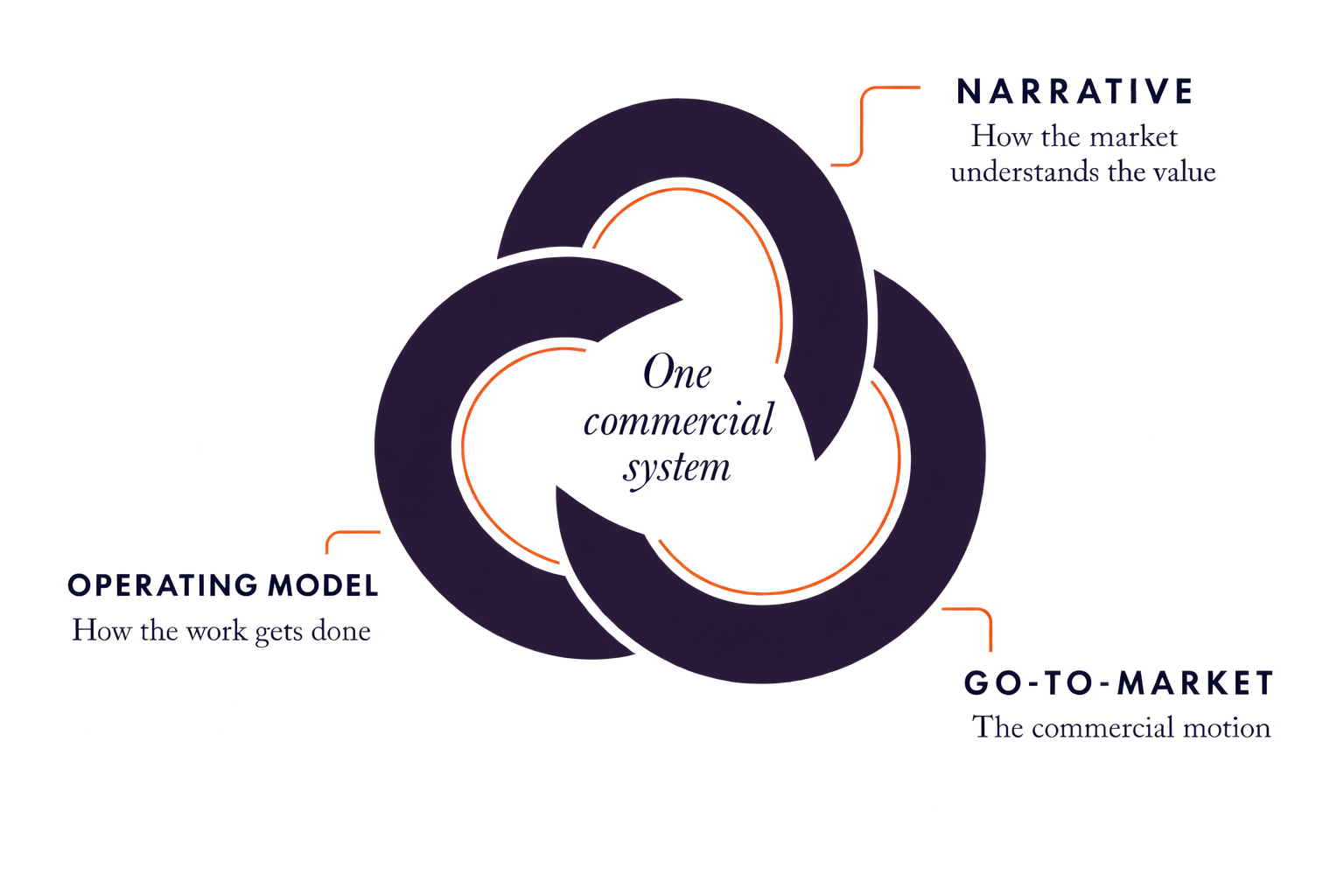
Narrative
Operating Model
Go-to-Market
The Commercialization Muscle Model™ is how AiRi diagnoses the connected commercial system.It assesses all four muscles because the presenting symptom does not automatically reveal the root cause.
Do we understand the new buyer reality?
Can we explain why the change matters?
Does the commercial motion fit the new market?
Can the organization operate differently?
The customer’s problem, what changed, who influences the decision, what makes them act, and what could stop them.
Signal of strain: We’re describing the customer we had two years ago.
Whether customers can find, understand, and repeat the story. We compare what the company says with what buyers, analysts, partners, search, and AI repeat.
Signal of strain: Different teams tell different stories.
Routes to market, proof, enablement, roles, handoffs, and how customer evidence changes the commercial plan.
Signal of strain: The motion still fits an earlier product, buyer, or market.
Decision rights, ownership, incentives, capabilities, resources, and accountability. Can teams coordinate the work and follow through?
Signal of strain: Everyone agreed. No one owned what happened next.
Market Fluency establishes the truth. Narrative Precision makes it recognizable and repeatable. Go-to-Market Architecture brings that value into the buying process. Organizational Readiness makes the decisions and follow-through possible.
A pressure point doesn’t always align to just one muscle. We examine the connective tissue to identify what’s causing the pressure and where to act first.
From understanding to action
The diagnosis identifies the constraint, the decision leadership must resolve, who owns the outcome, and the first move. Then the priority determines the right engagement.
You leave knowing what to change first and why.